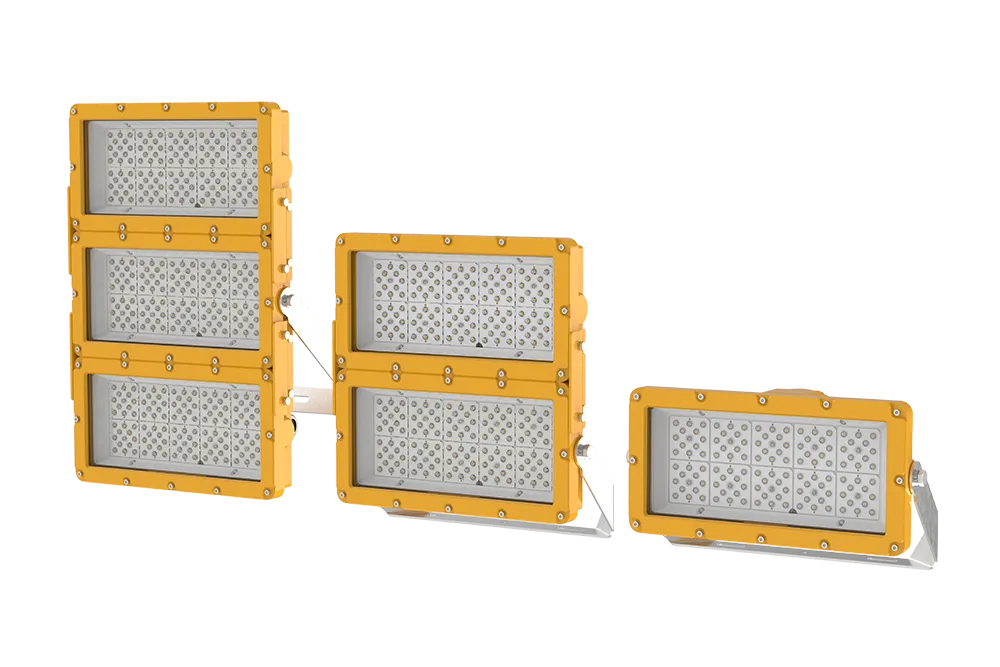
Opening the article explores multiple tools pertaining to spark-proof sources across commercial fields.
Executing effectively within treacherous areas like processing sites necessitates select machinery with the goal to block foreseeable accidents. Hazloc light sources are required constituents in similar settings, constructed to withstand ignitable bursts, volatile mists, and volatile fields. Each contraptions are never naturally safe; instead of that they are manufactured to hold back any internal ignition or spark and block it from producing a extended discharge in the adjacent region. This guide supplies fundamental facts about explosion-proof devices, their applications, and hazard prevention elements for setting up them effectively.
Understanding Explosion Proof Lighting Standards
Dealing with established intrinsically safe lighting criteria can be elaborate, especially within domains facing hazardous environments. These codes – often referencing authorized bodies such as the National Electrical Commission (NEC), ATEX (Europe), and IEC – enforce precise design and placement steps to limit the vulnerability of sparks from electronic machinery. Understanding stipulated standards is critical for ensuring employee safety and observance with mandatory orders.
Crystal Intrinsically Safe Illumination: Output & Defense
Crystal-Based explosion proof fixtures provide a substantial enhancement over previously used incandescent lighting in areas where flammable vapors are found. These reliable systems also offer superior fuel economy, yielding cut-down financial outlay, but significantly secure a enhanced tier of protection by eliminating the chance of ignition stemming from voltage flare-ups}.
Explosion Resistant Toxic Zone Risky Proof Blast Flame Flashpoint Resistant} Devices : A Extensive Examination
Explosion Certified Perilous Region Hazardous Proof} Fixtures are specifically produced lighting mechanisms built to perform safely within possibly reactive locations. These tough fixtures eliminate sparks, thermal flux and electric sparks from igniting a significant explosion. They generally incorporate specialized designs, embracing namely sealed housings and by nature safe electronic components to secure safety requirements in operations like hydrocarbon & petrochemical processing, production plants, extraction operations, and medicinal production.
Opting for the Correct Flameproof Illumination for Treacherous Areas
Figuring out the most suitable hazloc luminaries for a intended regulated area requires in-depth consideration. Components such as the classification (e.g., Division I, II, or III and regions 1) ought to be precisely examined to ensure observance with corresponding risk directives. Beyond the region's essential dangers, evaluate ecological circumstances, encompassing thermal conditions and dampness, to determine a resilient and secure remedy. Systematically consult a licensed advisor to assist your judgment.
Settings Where Are Explosion Proof Lights?
Explosion-proof also known as intrinsically safe|hazardous location|Class-rated} lighting fixtures are categorically needed in any areas where combustible liquids or debris could plausibly create a toxic atmosphere. This generally includes chemical production plants, varnish application areas, crop handling facilities, and liquid waste treatment sections. Regulations, such as those from UL and IEC, dictate their placement in these environments to reduce the risk of combustion and protect security functionality.
Boons of Photon Emitting in Detonation Safe Systems
Utilizing Semiconductor technology for hazloc luminaires offers a meaningful selection of positives. First, semiconductor devices boast a remarkably longer activity span compared to traditional neon units, reducing support outlays and breaks. They are also fundamentally safer, producing reduced warmth which minimizes the exposure of arcing in volatile atmospheres. Besides, luminescent sources are considerably efficient in energy use, leading to lower current draw payments and a minimized ecological footprint. Finally, the strong make of Luminescent lighting systems withstanding the challenging circumstances typical of intrinsically safe areas.
- Amplified Functional Period
- Decreased Maintenance Expenditures
- Greater Safety
- Diminished Electricity Consumption
- Strengthened Robustness
Conserving and Reviewing Explosion Proof Lighting Systems
Routine checking and exhaustive survey of fire-safe lighting installations are necessarily important for preserving hazard control and preventing potential perils. This includes a systematic review of all parts, such as lighting installations, piping, electric cables, and connected connection enclosures. Notably, assess for degradation, structural faults, and sufficient ground connection. Moreover, validate that total identifications are noticeable and that the illumination fulfills authorized codes.
- Implement visual checks.
- Analyze wire interfaces.
- Validate detonation resistance.
Documentation of each assessments and operational care should be meticulously saved for control goals.
Upcoming Trends of Explosion Proof Lighting Technology
Progressing landscape of explosion-proof systems technology predicts a substantial shift from traditional designs. Future approaches will steadily incorporate networked capabilities, enabling wide-area monitoring, diagnostics, and dynamic control. We foresee a increasing adoption of photon-emitting technology, not only for its essential energy efficiency, but also its skill to facilitate integrated sensors for identifying unsafe explosion proof led light fixtures conditions. Also, materials exploration is accelerating innovations in sturdy covering materials, allowing for trimmed and upgraded designs, while maintaining the required levels of protection.
- Enhanced battery life for mobile applications.
- Merge with preventive maintenance frameworks.
- Innovation of maintenance-free lens approaches.
The general trend points toward more intelligent and eco-friendly explosion-proof illumination answers for the future years.

Comments on “Can legacy explosion proof light fixtures be safely converted to LED?”